


The former lead singer of Five Star reveals all about the thrill of reclaiming lost time as an independent woman and her brand new album
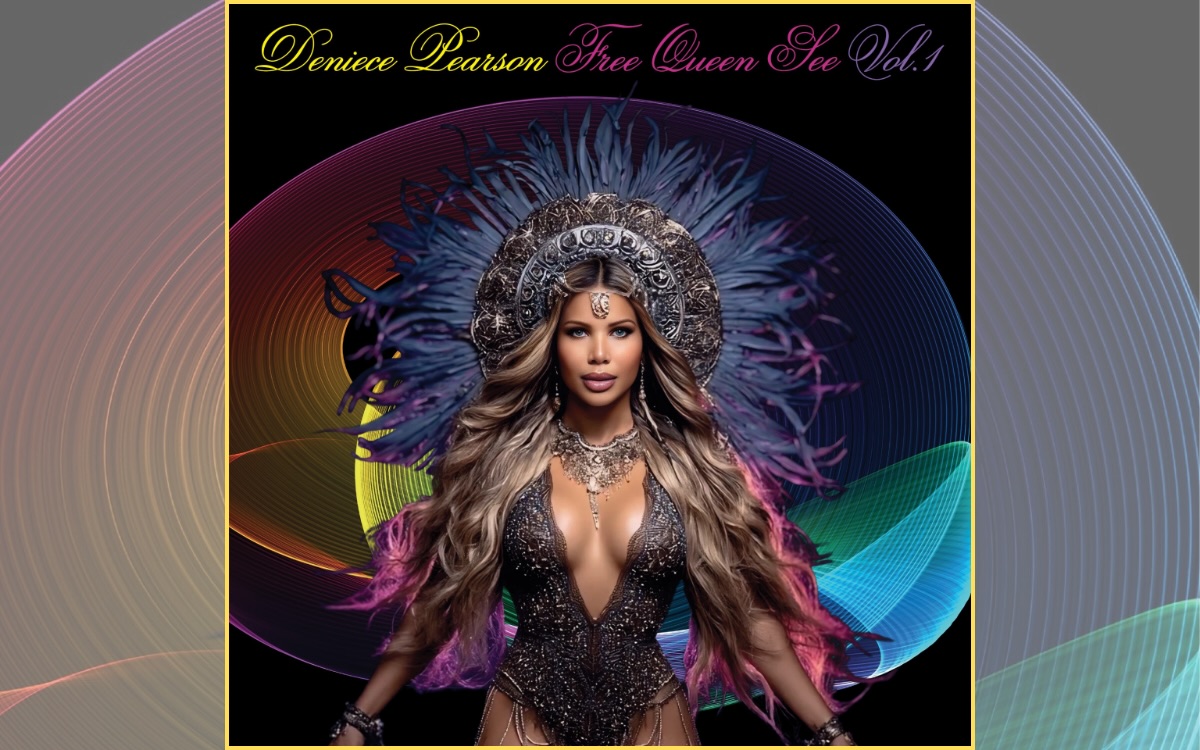
Rising to fame with her siblings in 80s pop phenomenon Five Star, Deniece Pearson now takes complete control on her second solo album, Free Queen See. The soulful star reveals all about the thrill of reclaiming lost time as an independent woman, the magic of her lucky number seven and channelling the spirit of Bob Marley…
Deniece Pearson, the free-spirited former lead vocalist of Five Star turned solo artist, is a very practical kind of pop star. Revisiting her Essex roots to record her new solo LP Free Queen See at a friend’s studio, she used the three-hour drive from her home in the Leicestershire village of Market Bosworth as an opportunity to indulge in the student lifestyle she missed out on while Five Star were busy selling millions of records on both sides of the Atlantic. The whole experience ultimately proved to be a liberating homecoming for the singer.
“Making this album was like going back to the beginning of the beginning,” says Deniece, reflecting on her return to the county that Five Star are indelibly associated with. “Because I never went to college, I didn’t get to do certain things, like having girly nights out. I was straight into music, where we were very protected. After that long drive, I saw this as chance for an adventure, part of the story of my journey.”
Which is why, if you thought you’d seen the lead singer of a platinum-selling pop band late at night in the car park of an Essex hotel, huddled up in her car for the night, then yes: that really was Deniece Pearson. “I wanted to do things my own independent way,” she laughs. “So I downloaded some Netflix films onto my iPad, got my blankets and hot water bottle, then sat sipping white wine from a glass I’d brought with me.
“Rather than pay for a hotel room, I thought I’d just pay for the parking there. I woke up in the morning and thought: ‘Yeah! I did it!’ I had a wash and was straight into the studio for that day’s session.”
The studio’s owner was horrified at Deniece seemingly putting herself through an ordeal – she could have stayed at the studio overnight and showered there – but Pearson is making up for lost time in being an independent woman.
Free Queen See
Free Queen See is only Deniece’s second solo album, 11 years after Imprint left her with mixed feelings.
Imprint was made with Deniece’s then-partner, who’d taken control more than the singer whose name was on the cover – and misspelled at that. “He was funding it, so I wasn’t 100 per cent on board,” admits Deniece ruefully.
“I co-wrote most of the tracks, but a lot of Imprint was his decision. On the sleeve, my name is spelled as ‘Denise’: his decision. On Free Queen See, I have full control: the writing, production, design. It has been an amazing journey.”
The first two singles from album number two are titled Forever Young and the beautiful simplicity of Like A Child. That gives an indication of the youthful innocence Deniece is out to recapture, car park sleepovers and all.
Like A Child was written after an unsettling verbal assault in the street by “a woman who was really lovely at first.” Deniece says she was “gobsmacked” by the incident. In bed that evening, she opened her music software and Like A Child emerged, its title taken from a line in Sarah Young’s popular religious work Jesus Calling, essentially a modern Bible translation. “I think you have to be like a child to enter the kingdom of Heaven,” muses Deniece. “Just because someone has said something bad to you, it doesn’t mean you have to reciprocate.”
In taking full control for the first time, the eclectic Free Queen See includes the Cherrelle-style ecstatic vocals of We Found Love – “That one is so 90s!” – to the tougher, more politicised Deliverance. With a photo of Bob Marley on the wall next to the studio vocal booth, his spirit came to Deniece in a dream, inspiring its lyrics: “Kings and queens of Africa, know no more oppression, only liberation/ Take your bow and take your crown: deliverance.” It’s a long way from Rain Or Shine, as Deniece admits: “Deliverance is very deep, I’ve never written like that before.”
Complete Control
In showcasing how Free Queen See was Deniece in full control, it was important to reclaim the spelling of her name. Most people know her as “Deniece” from the Five Star days and, as she says, “It’s also a tribute to Deniece Williams. But really I love this spelling of Deniece because of the number seven. ‘Deniece Pearson’ is seven-seven, the same as ‘Michael Jackson,’ and I was told by a clairvoyant that seven is a lucky number for me. I was first famous as ‘Deniece’, and I think it’s got a better flow to it than ‘Denise’.”
Which is fair enough, and of course Five Star’s first fame has been especially important to Deniece and her Five Star siblings this year, following the death of Stedman, the eldest Pearson, who was 60 when he died of complications from diabetes in March. “Sted was a gentleman,” says Deniece. “We were very much alike. I think I’m the female version of him: we both loved antiques, were into gold filigree, and liked a royal look. My walls at home are very queenly, while Sted was very kingly. We were regal together.”
Deniece speaks fondly of the drives she and her older brother would take near the famed Five Star mansion in Berkshire, which Stedman would soundtrack with mixtapes of Alexander O’Neal, Janet Jackson and Cherrelle. They had their last drive together while staying at the home of their mother, Delores, last New Year. Deniece reveals: “Sted told me: ‘Dens, we haven’t done this for such a long time.’ It was so dark that we got lost, but that was nice, as it meant we had this moment together. I didn’t know Sted was going to pass, and it was beautiful that we got to have that drive.”

Family Ties
Deniece is on good terms with the other Five Stars, too: she and Delroy chat regularly by phone from his home in LA, and she meets with Doris in London, where her eldest sister lives. Lorraine will be over from Dubai in October for a joint family birthday celebration: Lorraine, her husband and Deniece’s son Karan all share a birthday in the same week. Talking excitedly of having already ordered a birthday cake from Patisserie Valerie, Deniece says she and Lorraine also stayed together at their mother’s house in August to help ensure Delores wasn’t left on her own following Stedman’s death.
Deniece is full of sisterly laughter as she tells how Lorraine burst into her room at the family home, chuckling: “I told mummy: ‘Please don’t let Lorraine knock on my door,’ but next thing Lorraine was banging on my door, rat-a-tat-TAT, yelling: ‘I’m back!’ I told her: ‘Yeah, I know, I can hear that!’”
Considering the sisters didn’t speak for several years during the past decade, it’s good to know they’re all smiles again. Let’s be honest, Five Star’s legacy and the work of the five Pearsons deserves more critical respect. Sure, they had six Top 10 singles and headlined Wembley Arena, but achievements like being the first Black British band to win Best Group at the BRITs has been overshadowed by dodgy-in-retrospect coverage of how the Pearsons supposedly flaunted their wealth. There was more than a hint of systemic racism in the “know your place” tone of the reporting.
Timeless Appeal
Deniece is restrained in her view of how Five Star were treated, shrugging: “That’s how the game is. What goes up must come down, and the British press – and the public – like to raise you up to knock you down.” But she’s frustrated that so much of Five Star’s commercial acclaim was around Silk And Steel, with 1988’s harder-edged fourth album Rock The World particularly meriting reassessment in Deniece’s view. “The production on Rock The World was phenomenal,” she enthuses. “As much as Rock The World wasn’t in everyone’s faces when it came out, it’s a classic. But every body of work we did in Five Star still resonates.”
That those hits still have a timeless appeal is largely down to the care the siblings’ father, Buster Pearson, took in ensuring the musicianship was top quality. A former touring guitarist for Wilson Pickett and Jimmy Cliff, Buster knew the value of a good session band. To that end, Five Star’s album credits feature legends like Michael Jackson’s musical director Greg Phillinganes on keyboards, who recruited guitarist Paul Jackson Jr to flesh out Five Star’s riffs.
“Our music is timeless because of the care and attention that was put into it,” reasons Deniece. “The production is beautiful. Listen to those drums on Can’t Wait Another Minute, they sound so huge. The toms are so important to our sound.”
Deniece believes Five Star were essentially a clash of cultures, as she theorises: “The electronic 80s sounds of Gary Numan and Ultravox were wonderful, but we had a more American approach, because of the musicians playing on our records. You had five kids from Romford who sounded American, too, growing up on that stuff, and then you had our Jamaican dad, with his feel from playing on tour with people like Wilson Pickett.”
Black & British
Deniece laughs at just how American the Pearsons wanted to be in the mid-80s, saying: “When we went to America, people looked down at us and exclaimed: ‘They’re so small! Speak! Speak!’ We were young, Black and British, which they just weren’t used to, so they really wanted to hear our accents.” It was an appeal that also continues with LGBTQ+ audiences, as Deniece assesses: “We had the sequins, big hair and make-up. I love how well that goes down with LGBTQ+ people, but then I always loved having big hair and make-up.”
Buster Pearson was seen as a controversial figure during Five Star’s heyday, but Deniece is able to weigh up her father’s abilities rationally, while acknowledging his perfectionist streak carried on in her approach to making Free Queen See.
Shortly before Buster’s death in 2012, Deniece told her father: “You made some bad decisions. But the majority were good, and they overrode any of the bad.” She says now: “I’m so glad I told dad that before he passed.”
Buster would share stories of touring with the greats, but Deniece says: “Daddy’s love of those times was more about his excitement than stories. He was always like a kid in a sweetshop when he was in the studio. He had a great ear, saying: ‘That’s a hit, that one’s a hit, too’ when we were recording. His aura fed my soul, and I still feel it when I’m in the studio now.”
Destiny’s Child
Now fully in control of her destiny and planning a tour in addition to her regular appearances at Rewind and Let’s Rock festivals – “I’ll play Rain Or Shine and System Addict on the new tour, to remind the audiences how strong I’ve come with the new stuff” – Deniece Pearson, queen of the seven-seven, can’t wait to unleash Free Queen See on an unsuspecting world. “I said the word ‘frequency’, and I don’t know how it then became the title,” admits Deniece. “It just came to me: Free. Queen. See. The queen is free and now she can see.
“It’s about ‘Is this all there is to life?’ You can do a job you love, then settle down with the white picket fence and children, thinking: ‘Is this all there is? Really?’ I started asking myself that question. And this album is what then needed to come along. It’s been an amazing journey, and now it’s got a new chapter.”
For more on Deniece and Free Queen See click here
Subscribe to Classic Pop magazine here
Classic Pop may earn commission from the links on this page, but we only feature products we think you will enjoy.