


Co-founder and guitarist Bruce Watson recounts the Scottish band's bittersweet journey while keeping the legacy alive
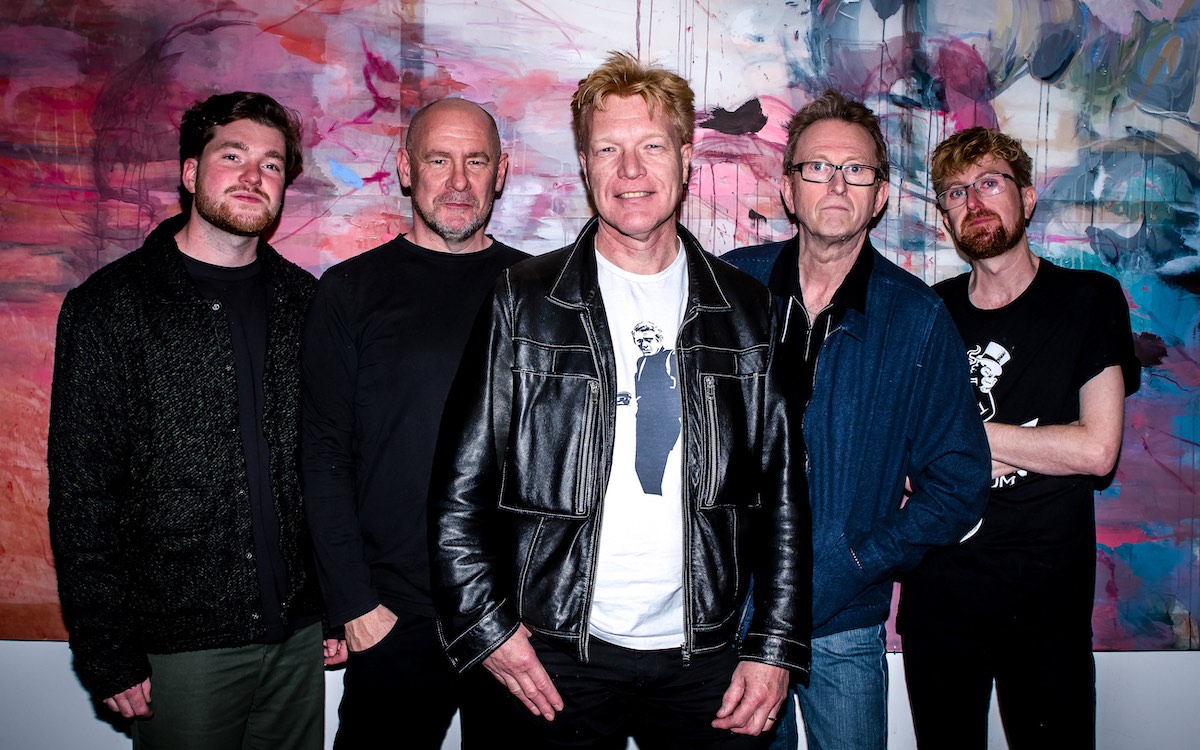
Big Country broke out of the new wave with a widescreen vision and distinctly Scottish brand of heartland blue-collar rock. Co-founder and guitarist Bruce Watson recounts their bittersweet journey while keeping the legacy alive.
In 1982, Big Country burst onto the horizon with a swell of duelling guitars, rumbling drums and lofty ideals. Theirs was an expansive, widescreen vista, tapping into Celtic tradition, yet contemporary to the core. A kind of Springsteen-esque blue-collar heartland rock – if Bruce had grown up in the Scottish Lowlands. Like the Boss, their gritty anthems carried a sense of hope, born in a small town and reaching for something greater.
Big Country was the creation of visionary frontman, Stuart Adamson, and another Bruce – guitarist, Bruce Watson. They were both ex-punks from Dunfermline, Adamson had seen some success as guitarist of the Skids, whose 1979 single, Into The Valley, made the UK Top 10. But by the third Skids record explains Watson, “Stuart was getting a bit restless”, and scoped out Bruce for a new project. “About a year later he turned up at my flat and said, ‘Look, I’ve left the band, do you want to get this new thing together?’ I don’t think Stuart knew what he wanted to do at that point. It was just one of those suck it and see kind of things.”
They spent a month or so “working with a little drum machine, a couple of guitars, a synthesizer and this little tape machine.” The resulting tracks formed the core of their first album, 1983’s The Crossing.
They assembled a band, though early gigs were brutal. “Our management put us out [on the road] with Alice Cooper. It was sink or swim. We did a couple of dates and the crew manager just said, ‘Look, this ain’t working, boys.’ I mean, we weren’t that great, and Alice’s fans certainly let us know by throwing bottles of piss at us. It was a learning curve.”
Pivotal Positions
Back as a duo, they just needed the right vehicle to drive them forward. The answer came in the form of bassist Tony Butler and drummer, Mark Brzezicki, who had performed on Stuart’s final Skids tour in the support act, On The Air. The formidable pair had established themselves as ‘Rhythm for Hire’ – ‘the Sly and Robbie of Soho’, in reference to the famed session players.
“They were well known in recording circles as a shit-hot rhythm section,” says Bruce. Indeed, Butler had turned down The Pretenders to commit to Big Country. Their arrival proved pivotal, injecting further vivacity and motion into Adamson’s rousing anthems.
Initial recordings for the band’s debut with producer Chris Thomas yielded promising results, though progress was frustratingly slow while Thomas juggled simultaneous sessions with Elton John in Montserrat. “Steve Lillywhite’s name came up,” explains Bruce. Though working with U2 at the time, Lillywhite became available for a couple of days, choosing Fields Of Fire from their demo tape as a potential single. “And that turned out how it turned out. It was absolutely amazing.” Evidently, Lillywhite was the final piece of the puzzle. Famed for his thunderous drum sounds achieved with Siouxsie Sioux and the like, his touch helped secure a Top 10 hit.
“We thought, ‘Oh man, we still need to get somebody to do this album!’ And then Steve got back in touch and said, ‘U2 have moved something, so I’ve got a six-week window.’ So, big thanks to U2 for moving their calendar!”
Their debut, The Crossing is grounded in the earth – raw and rugged, solid and unflinching, like the landscape evoked in its lyrics, conjuring up harvests and fields of fire and lovers’ voices on mountainsides. That expansive outlook became a defining trademark. “We always treated the music almost like a mini soundtrack for a movie that didn’t exist”, says Bruce.

Celtic Roots
Much is made of Big Country’s Celtic roots – bagpipe-like guitars and melodic traditionalism. But Watson is ready to shatter a few myths. Their signature sound, he says, was more by accident than design.
“There was only one unwritten rule that Stuart and myself had: We didn’t want to go down the blues route. Thin Lizzy, Status Quo, Wishbone Ash had done that – we loved all those bands, but we didn’t want to just do that twin guitar thing. So, we thought, no bending notes, no blues, we’ll just play the melodies.
“I think that’s why people said, ‘Oh,it sounds like bagpipes!’ But it’s basically because it was more like electric folk as opposed to electric blues. At the end of the day, it’s all rock.”
So, it wasn’t a conscious decision? “No. I think that was just an easy way for the press and even the record company to describe what we sound like. I mean, we didn’t mind, because nobody else was doing that kind of thing.” In fact, Watson’s own youth was spent lapping up Slade and The Sensational Alex Harvey Band, before being turned on to The Clash, and post-punks Magazine and Wire. And while they didn’t follow the synth-pop path, they certainly weren’t averse to its charms.
“A lot of our early demos had synthesizers. In this little studio, we had those two keyboards. We didn’t even have stands; they were sitting on ironing boards. But, both of us being guitar players, that was the way to go. I couldn’t imagine us with Human League haircuts, but we could have gone down that route. And I love The Human League as well.”
Crossover Appeal
The Crossing was a No.3 hit in the UK, made inroads in the United States, and did particularly well in Europe – Germany would become a home-from-home. More recently, In A Big Country found new favour, appearing in the 2023 film, Air, directed by Ben Affleck.
Big Country retained all the power and attack of their roots, but had developed a grander vision. While punk was inherently nihilistic, tearing down traditional institutions, the question remained: what do you build in their place? Stuart Adamson seemed intent on filling that void, offering optimism and dignity among the defiance.
Adamson’s words were often ambiguous and poetic, drawing inspiration from real life, whether his own or observed. He sang like someone with something to say, pairing the grim realities of the lyrics with the uplifting feel of the music. “Stuart was a big reader as well,” Watson reveals. “He was reading a lot of books on the Vietnam War.”
These themes developed on their second album, and only No.1, 1984’s Steeltown, partly recorded at ABBA’s Polar Studios in Stockholm. (During this time, Brzezicki played drums on Frida Lyngstad’s solo record, Shine, while Adamson contributed the song, Heart Of The Country – the common link being producer, Lillywhite.)
“It was during the Falklands War and the Miners’ Strike,” says Bruce, of Steeltown. There is an obvious parallel to be drawn with Springsteen’s Born In The U.S.A., released in the same year – patriotism laced with cynicism, working class toil amid broken industry, beleaguered soldiers – in some ways, eerily relevant today. Stuart was just writing about what was happening at the time,” acknowledges Watson. “In the 80s, it was grim everywhere. Sometimes people forget, it was still Cold War time.”

A-List Support
Since that fledgling outing with Alice Cooper, Big Country had developed into a live tour de force, securing much-coveted support spots – from The Jam’s 1982 farewell tour to Freddie Mercury’s final Queen show at Knebworth in 1986 – and also opening for their hero, David Bowie the following year. “Bowie was abnormally normal. He was a right chain smoker. I wouldn’t say that the Glass Spider Tour was one of his best… When you go on tour, you still expect to hear a lot of the hits you’ve had in the past, and he tended to ignore a lot of his catalogue then. A lot of people were going, ‘Play Jean Genie for God’s sake!’ But he was still amazing.”
Meanwhile, Mick Jagger called them, “One of the best opening acts we’ve ever had.” “He never said it to me,” says Bruce, beaming. “But if he did say that, that’s a brilliant compliment. We had two tours with The Rolling Stones. They were absolute gentlemen, and again, abnormally normal. Except that they are the biggest rock and roll band in the world.”
Big Country’s trajectory was typical of many bands. “The first three albums are quintessential Big Country,” says Bruce. “They all work together in different ways. Steeltown, is completely different from the first LP. It’s hard and nasty and in-your-face. The Seer is more romantic and mystical. And then, the album we did after that, Peace In Our Time, is the one that most fans sort of hate. Sonically, it’s a great sounding record, but it’s not a great album.”
Dream Collaboration
Big Country collaborated with Kate Bush on the title track to The Seer. “We had one song,” Bruce explains, “in the same vein as what Kate had done on The Dreaming. We were into Kate Bush anyway, we didn’t copy anything, but it was just a little bit reminiscent. I think maybe Stuart had said to Robin Millar, the producer, ‘it’d be great if we could get Kate Bush to sing on this’, just as a throwaway comment, and Robin went, ‘I’ll fucking phone her then.’ What?”
Thankfully, Kate was keen. “So, we sent her the cassette and she came up to Robin’s studio.” Clearly, Bush took the challenge seriously. “She spent five hours in there and it’s not like a backing vocal or a duet, it was like she just completely rearranged the whole thing. It was unbelievable what she did. We were up in the control room and she was in the studio room and we could see her from above. We were blown away.”
The only frustration was when the label rejected Robin’s original mix. “It kind of pissed me off at the end when the album got remixed again, and I felt like Kate’s vocals had been pushed back a little bit. I just felt the version that Robin did, her vocals were right up there. What she’d done was amazing. It was just all these different parts. It wasn’t just harmonies; she completely rewrote the vocal parts. Genius.”
Terrible Tragedy
Following Peace In Our Time, the band’s fortunes wavered, never quite reaching the same heights, though remaining a compelling live act. The Kinks’ Ray Davies even co-opted them as his Glastonbury 1997 backing band. But struggles surfaced when Adamson briefly went missing in 1999. The troubled frontman tragically took his own life in a Honolulu hotel room, in 2001.
“I knew there was something wrong,” says Bruce. “Obviously, Stuart had problems with alcohol.” By now, Stuart had relocated to Nashville, disconnected from their old Dunfermline haunts. “When somebody moves thousands of miles away, you just don’t know what’s going on. You maybe meet up months later when you’re ready to go on tour or do an album. But obviously, I knew that he had a lot of problems.
“I thought it would end up in some sort of tragedy but I didn’t know what, so it was horrible when it happened. It’s hard to explain, but you just get a feeling.”
While respected by fans and peers, Adamson remains overlooked. “I don’t think he got the recognition that he deserved,” continues Bruce. “But I think it’s maybe because people like that are quite honest. Stuart was very serious when it came down to talking about his songs. And I think a lot of journalists thought, ‘Oh, he’s a bit po-faced.’ But in real life, he wasn’t anything like that. He was one of the funniest guys I’ve ever met. A natural comedian.”
Bruce remains assured of Adamson’s impact. “It’s a gift. It’s all there in the songs, these lyrics. If you listen to Fragile Thing [from 1999’s Driving To Damascus], you can just tell he’s different.”

Remembering Mike Peters
Years earlier, Adamson had given his blessing for Mike Peters of The Alarm to fill his position should he ever become unavailable – a prescient succession plan in hindsight. After a brief reunion to honour their fallen friend, bassist Butler retired in 2012. Simple Minds’ Derek Forbes stepped in on bass, alongside Mike Peters and Bruce’s son Jamie, for 2013’s The Journey.
Peters sadly passed away in April 2025, following a long battle with cancer. “I got really friendly with Mike,” says Bruce. “He came out and did some stuff with us, and it was brilliant. I’ve done a lot of writing with Mike. He was a person I could work with quite easily. But again, Mike’s kind of like Stuart, you know, there’s just something there that’s unique.”
Once again, Bruce had to come to terms with losing another friend. It was a long time coming, as Mike battled his illness. “Mike was a fighter… he used to fight it and fight it. At the end, when I spoke to him beforehand, he was going in for treatment, and I just assumed he was going to be all right because every time he went into hospital and was on a new regime, he always came out the other side.
“He came out on the last tour that I did last year. He did about six weeks with us, and I could see it was hard. Some nights he was great, but on others he was struggling because it was physical. Some nights I was like, ‘Oh, Mike, calm down a wee bit.’ But he would never do that. You’ll never get Mike off the stage. He was just 100 per cent.”
Show Must Go On
More recent personnel changes have been decidedly messier, culminating in the departure of Brzezicki along with vocalist Simon Hough in 2024. A strange turn of events that has seen two distinct entities touring as Big Country…
“I don’t know where Mark’s at,” says Bruce. “To be honest with you, I did that tour with Mark last year and he just left halfway through, decided he didn’t like the way things were going.”
The memory still seems raw. “And then a couple of months later, they start a band up and call it Big Country.”
In the UK, Brzezicki and Hough’s splinter group is billed as From Big Country, though on a recent US tour, that all-important prefix was dropped. How does that sit in terms of who owns the band name? “As far as I’m concerned, I’m Big Country,” says Bruce. “I mean, it’s actually in the public domain that they’ve left Big Country.”
But the show must go on. The current official line-up includes Jamie Watson, and new recruits Tommie Paxton on vocals and guitar, bassist Chris Stones and drummer Reece Dobbin. “Tommie and Chris came from a Big Country tribute band called Restless Natives,” explains Bruce. “They actually knew the songs better than I did, practically.”
It’s a surreal twist of fate, graduating from a tribute band to becoming official members. “They really take care of the songs, they’re really respectful. It’s a labour of love for them.”
There’s a new Big Country album in the works, with Bruce fleshing out old seeds of ideas originally worked on with Stuart back in the day. “I’ve always wanted to develop songs like that to how I thought they should have been finished. So, I’ve completely re-recorded them with a new line-up and just rearranged the songs and made them a bit more contemporary.”
Big Country remain constant road warriors and choosing the setlist, rest assured, he won’t be ‘doing a Bowie’. “We’ll be doing a few of the songs off the album as well as the usual suspects… Our first album had all the hits on it. You’ve got to play those songs or people wouldn’t come and see you again!”
For the latest Big Country news click here
Featured image credit: MB Photography Scotland
Subscribe to Classic Pop magazine here
Classic Pop may earn commission from the links on this page, but we only feature products we think you will enjoy.